
News
My Forever Studio: Nick Hakim has your gear on long-term loan
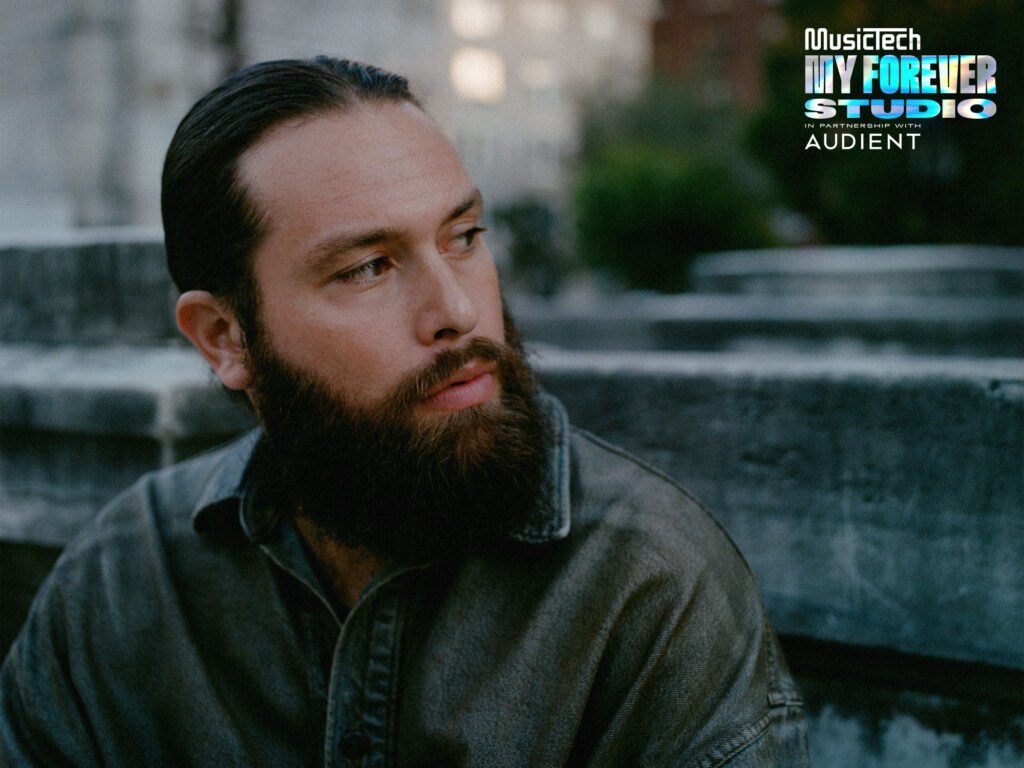

In partnership with Audient
My Forever Studio Season 8 is here — produced in partnership with Audient — and once again, our hosts Chris Barker and Will Betts are transporting an eclectic mix of talented producers into Studio Foreverdom.
Nick Hakim is a songwriter, producer and multi-instrumentalist who Lianne La Havas has called “one of the greatest musical minds ever.” Combining R&B, soul, indie and psychedelia, he’s released a string of remarkable records and collaborated with major acts including Erykah Badu, Anderson Paak, and Mac DeMarco.
Nick joins us on the show in the run-up to his latest album I Can See, to talk about the inevitability of him becoming an artist, how music therapy influences his practice, and how the Forever Studio selection process evokes the limited nature of his album-making process.
In this episode of My Forever Studio, hear from Nick Hakim how a school strike led him to one of his mentors, how a favourite record growing up inspired one of his forever studio selections, and why he’d want to build his dream studio far from his current home in New York.
The My Forever Studio podcast – created in partnership with Audient – sees artists, producers, and engineers create their dream fantasy Forever Studio, wherever they want in the universe. However, hosts Chris Barker and Will Betts impose some strict rules in the Forever Studio. Our guests are permitted a limited number of items in their creative space, so they must choose carefully. There will be nostalgia. There will be anecdotes. There may be gags. But there will be no bundles!
Subscribe to My Forever Studio on Apple Podcasts and Spotify, and check out all episodes so far via MusicTech.
Check out the full transcript from the episode below:
Chris Barker
0:01
Hi, I’m Chris Barker.
Will Betts
0:06
And I’m Will Betts, and this is the MusicTech My Forever Studio podcast, brought to you in partnership with Audient.
Chris Barker
0:12
In this podcast, we speak with musicians, DJs, engineers, and producers about their fantasy forever studio.
Will Betts
0:17
That’s right, the studios that our guests choose are ones that they must live with for all eternity, but they must adhere to our totally arbitrary rules.
Chris Barker
0:26
That’s right, the rules. Okay, so our guests will get a computer, a DAW, and an audio interface. Those are the 3 items we let everybody choose, then our guests will choose just 6 other bits of studio gear plus 1 non-studio-related luxury item.
Will Betts
0:39
And—
Nick Hakim
0:42
No bundles!
Chris Barker
0:43
Oh yes, no bundles.
Will Betts
0:46
Choosing something sold as a package of separate software or hardware as a single item is forbidden.
Chris Barker
0:52
Yes, that’s right. Our guest this time is a songwriter, producer, and multi-instrumentalist who Lianne La Havas has called one of the greatest musical minds ever.
Will Betts
1:00
Indeed, combining R&B, soul, indie, and psychedelia, he broke through with his viral track I Don’t Know and critically acclaimed debut album Green Twins.
Chris Barker
1:08
He’s gone on to release a string of remarkable records and collaborate with major acts like Erykah Badu, Anderson .Paak, and Mac DeMarco.
Will Betts
1:15
But with an equal passion for production and performance, which items will make the cut for his Forever Studio?
Chris Barker
1:21
Well, let’s find out. This is My Forever Studio with Nick Hakim. Hello, Nick.
Nick Hakim
1:25
Hey, how are you? Hello.
Chris Barker
1:27
Welcome to the Forever Studio dungeon.
Will Betts
1:29
Yeah.
Chris Barker
1:30
We are back.
Will Betts
1:31
We’re back.
Chris Barker
1:32
We are back.
Nick Hakim
1:32
Amazing. Thanks for having me.
Chris Barker
1:35
You told us just before we started recording that you have checked out the podcast.
Nick Hakim
1:38
Oh yeah.
Chris Barker
1:39
And you’ve got some notes.
Nick Hakim
1:40
Yeah.
Chris Barker
1:41
Well, before we dig in too deep, tell us about like the early days of how you got started and how you sort of discovered your sound, because it’s quite a unique sound. Like we say, it transitions over a few genres if you want to put things in boxes.
Nick Hakim
1:55
Absolutely. I think everyone is obviously a product of their environment. I was born and raised in Washington, D.C. I’m first-generation American. My mother’s Chilean and my father’s Peruvian. So already Washington, D.C., Baltimore, Peru, Chile, all these like worlds and all these different like musical backgrounds and just the culture where I was. And then like both of my parents play guitar and sing. My younger brother started playing guitar very early.
Nick Hakim
2:31
My older brother played drums. A lot of my aunts also play guitar that are down in South America. and like, it’s like I actually discovered that my dad’s first cousin was in this very well-known hardcore punk band from Lima, Peru called Narcosis. I learned about that like 2 years ago, but—
Chris Barker
2:54
The mix was inevitable.
Nick Hakim
2:55
Yeah, it’s like kind of in the, in the air a little bit. And like, I was just— but I wasn’t— I didn’t get interested in like learning how to actually play music until I was 16. I always loved music and I watched my younger brother and my parents and I always had like an ear for it. I always knew I could hear things and sing them back or like, like kind of like I could— when I was young, like my mother would always be like, you have a nice singing voice, because she also has like, she has an amazing— my mom’s— my mom has such an amazing like high soft voice and like, and she also plays guitar and so does my father. And so they both play guitar and sing and like, so they were always doing it just for fun. And just being around that naturally kind of led me to like learn on this digital Yamaha keyboard that was like $80, 80 quid. Like, it was like a cheap—
Chris Barker
3:51
PSS?
Nick Hakim
3:51
Yeah, like something like that.
Chris Barker
3:52
One of those educational type ones, yeah.
Nick Hakim
3:54
And I really started to like become interested, honestly, because my younger brother was so interested in music.
Chris Barker
4:00
Ah, okay.
Nick Hakim
4:01
And because he was obsessed with guitar, like he would literally be on the toilet like for like hours, like, you know, like with the guitar, with a guitar, like practicing. We’d be like just like, like, you know, like when he was like 10, you know, like it was like, so he was like obsessed with learning.
Chris Barker
4:17
Any particular type of toilet guitar that he preferred?
Nick Hakim
4:19
I was like, the one that the family guitar.
Chris Barker
4:21
Yeah, we’re just like the one that’s in the toilet on a stand.
Nick Hakim
4:26
Exactly, exactly.
Will Betts
4:27
Like, yeah, the acoustic though.
Chris Barker
4:29
Yeah, the acoustics.
Nick Hakim
4:29
Yeah, exactly, exactly. I think he liked the acoustic even though, yeah, it wasn’t that echoey. But anyways, uh, yeah, but you know, just being around him and like seeing how passionate he was, it made me kind of naturally want to start learning keys. And we had this little keyboard at home, so that’s kind of where I started my journey with like learning how to like actually play piano.
Chris Barker
4:55
And learning other people’s songs from the start.
Nick Hakim
4:57
Yeah, and trying to learn stuff from by listening by ear and just playing along with my brother and not really knowing but also figuring out how it felt. But I remember like when I had some foundational like understanding of like what a chord was and what a melody was and like just the like language used around like music, I started to like really feel like, like even though I wasn’t very good, I still felt very like, like it was medicinal or it was like almost like, like it made me feel like calm.
Chris Barker
5:27
Yeah.
Nick Hakim
5:27
You know, it made me and I, you know, adolescence is hard for everyone. And I moved around schools a lot. Like, I got in a little bit of trouble, but when I got into music, it like really focused my, my, my, like, my character almost. Like, it kind of like defined me almost.
Chris Barker
5:45
Like, and that’s how it started. A story that a lot of people have. They find that and they kind of go, well, this, this, I feel calm now and I feel, I feel like I belong to this. Yeah, exactly. This feels worthwhile.
Nick Hakim
5:54
Yeah.
Chris Barker
5:55
Because a lot of school, for a lot of people, cannot feel worthwhile. They’re like, I don’t know why I need to know this, or I don’t know. And then this, it’s like, oh, I’m interested in.
Nick Hakim
6:01
Absolutely.
Chris Barker
6:03
So how did that journey then go into like, you know, recording? And because that’s the next step, because I guess, were your parents recording or were they just playing for fun?
Nick Hakim
6:11
No, no, no, just for fun. Everyone was just doing it for fun. But my younger brother and I started making like little songs together, him on guitar and I would sing and write lyrics. And I got into music at like 16, 17, and I graduated high school when I was 19. So I had like 2 and a half-ish years of extreme focus on practicing and learning as much as I could.
Will Betts
6:36
Yeah.
Nick Hakim
6:37
And I basically went through a phase of, like, just before I went to college, I just had, like, a really unique experience where, like, I, you know, I went to 4 different high schools and, like, the last 2 schools that I went to, it was like there was a year where, like, the teachers all went on strike. And so I had like a year of like where I just went to this other school, like music school, and I met some of like my— to this day, like they are, I consider them like mentors and, um—
Chris Barker
7:09
Well, thank goodness for that strike.
Will Betts
7:11
Yeah.
Nick Hakim
7:11
And like very instrumental people in like the DC music scene, but also like one of my teachers was, uh, Lorenzo Ferguson, who goes by Zo! with the exclamation mark, who played and played keys and did some writing in that band, The Foreign Exchange. And he did like a lot of records with like Phonte from Little Brother. And he just like was like, I don’t know where this kid came from, but he’s like in my room every day. And like, and I was just like, and I was just like there. He made like little note cards for us to learn like chords. Like the first one was Flashing Lights by Kanye West. And then the second one was One Mo’Gin by D’Angelo. And like he made these chords because I was like, he was like, what songs do you want to learn? And those were the 2 songs I said, and he would be like, okay, like, and then he would just play drums.
Nick Hakim
8:02
He was an— he’s an amazing multi-instrumentalist, like he plays everything. And all the teachers there, like Omar Hunter, Jake Coleman, Terrence Nicholson, Asheru Gabriel. Asheru, who did the theme song for The Boondocks, the animated show, like he was also a teacher in the school.
Will Betts
8:21
No way.
Nick Hakim
8:22
So it was like all these, like, yeah, like incredible people to— I feel so lucky to have crossed paths with them at a young age.
Chris Barker
8:32
And that was complete fluke because of a teacher strike? That’s—
Nick Hakim
8:34
Kinda. I mean, it was like 2 schools that were in the same building. Yeah, they were in one floor and I was on another floor. And it was like a— it was like a—
Chris Barker
8:42
yeah, amazing. Exactly.
Nick Hakim
8:43
Yeah. And then, uh, you know, throughout like my, uh, couple, 2 and a half years, I applied to a few colleges. Berklee accepted me with like a little bit of scholarship, and then, uh, I went and I was kind of at a crossroads because there were some people that were like, you know, you don’t have to go to study music, like you can just do music. And I was like, yeah, but I want to like enhance my understanding of like— I feel like I was so behind, like in a way. Like I feel like a lot—
Chris Barker
9:16
When you start late at 16, it’s kind of— you do, because a lot of people start at 3 and stuff down there.
Nick Hakim
9:21
Yeah. And so I felt very behind, and I also, I wanted to have some kind of credibility to, like, teach.
Will Betts
9:29
Mm.
Nick Hakim
9:30
And when I was at Berklee, I taught at an after-school program the whole— basically the whole time I was there. And I worked, like, 4 days a week after school and, like, at this— at the Yawkey Boys and Girls Club in Roxbury. And then I also studied my last couple years there. I was doing like partial, like major in music therapy. Okay, and so I was like really interested in that.
Chris Barker
9:59
And so you’re kind of building, building yourself up for not a career as an artist, as you were building a just-in-case, like maybe I’ll do this, maybe I’ll do that. Yeah, well, or did you always think I’m gonna be an artist?
Nick Hakim
10:10
No, I always thought I was gonna be an artist. Yeah, but I definitely was like, I want to have that be a part of my practice, and it has been.
Chris Barker
10:17
Yeah.
Nick Hakim
10:17
I mean, I’ve— the whole time I was there, I worked at this after-school program, and then for a year I volunteered at a juvenile detention center, or a few, every Monday, and with this music, with this, with some other students that were also studying music therapy at Berklee. And all this time was happening, and I was writing my first EPs.
Chris Barker
10:41
Okay.
Nick Hakim
10:42
There was like a lot of time I spent when I was a student gathering my like knowledge around the more technical language and the way that this school taught it as well, because it’s like— and I always— I’m very grateful that I always had the understanding that this is just how some people look at, understand music, you know, and like how they kind of like explain it. ‘Cause I think it’s a very dense field where like there’s so many different truths to like how to understand it, you know, and it’s like, this is—
Chris Barker
11:18
So did going to college reinforce what you thought or did it change?
Nick Hakim
11:23
I think it just, I think it gave a very, like a very structured way of looking at, like, especially like looking at like theory or like looking at piano and like how we connect it like with like jazz theory and like some counterpoint stuff. And like, I really am, I went to school without knowing any of that stuff really, just like raw, like piano singing.
Chris Barker
11:45
Yeah.
Nick Hakim
11:46
And, and I started playing guitar in college, um, which I, I still have my mom’s guitar that she gave to my older brother, but then she was like, he’s not playing it, so you take it.
Will Betts
11:59
You were talking about, um, how you understand music. There are several ways to understand music. Did that change at all when you were teaching the after-school classes, or in the juvenile detention center when you were teaching those people as well? Like, did that alter the way that you thought about music, or was it still very much in that same, in the sort of the Berklee style?
Nick Hakim
12:19
Well, no, it was my own way for sure. I don’t know. I feel like just being present with young people that are trying to figure out and that are struggling is so important. Yeah, just the consistency of someone being present, even if it’s for like 6 months or a year or something. I kind of feel like the field of like what music therapy is, is so broad. You know, when you think of music therapy, it’s like ambient meditation or like, you know, sound like meditation bowls, like sound bowls.
Will Betts
12:49
Yeah.
Nick Hakim
12:49
Like, you know, and like that’s all amazing, but my philosophy around it is more that music is therapeutic. It’s like about like the— I think it’s more about like being present with like people like in the flesh and like being able to like talk to them and having music be like a, like a guide along with— yeah, like, yeah, and like it being like a part of the conversation. I don’t know.
Chris Barker
13:16
It’s— I think it’s similar to sport in that way, like where it’s like whatever the background, you can find that middle ground in music or in sport and where you connect with people that maybe all aren’t from the same backgrounds. Or, and once you’re in it and that’s all you’re thinking about, that’s meditative in itself. Like when you had your hands on that Yamaha keyboard, it’s like suddenly everything else disappears.
Nick Hakim
13:37
And like, yeah, and I think like kind of being present with people the same way that I had that for myself. And my mom worked at high schools with a lot of young people, and like I saw her doing that. Yeah, you know, it was inspiring. And like, I was kind of like repeating behavior that I saw. Yeah, that was like positive, you know. Yeah, well, in a way.
Chris Barker
13:56
Well, let’s start putting together this Forever Studio. I mean, starting with where in the world you would put your forever studio and what the vibe would be like.
Nick Hakim
14:06
This was a fun one to think about because it’s somewhere that I’ve been actually dreaming about spending, like, you know, like my dream would be to go here for 6 months and participate.
Chris Barker
14:21
Forever, you’ve got.
Nick Hakim
14:22
I know, exactly. So now I’m like, yeah, you know, in this forever hypothetical, I would love to build a studio in a movable house in Chiloé in Chile, which is a region in Chile right before you get to the Patagonia. And it’s a series of islands. There’s this, um, these, uh, ceremonies of moving houses where like the whole community helps move a house on like logs and they— the houses like float. on the— they like move from island to— houses move from like island to island. And my ideal studio would be—
Chris Barker
15:03
A boat?
Nick Hakim
15:04
Would be on— in one of these houses that can move. And, you know, I haven’t thought about that. There’s a lot of logistical things about, you know, if we’re moving the house, like, which I wouldn’t do frequently, maybe like every 20 years, but maybe like every 50 years.
Chris Barker
15:19
Is moving the house part of like a traditional ceremony then?
Nick Hakim
15:23
Yeah.
Chris Barker
15:24
Okay.
Nick Hakim
15:24
So it’s like, so it is like, so that’s part of it. They use like cattle and, they— it’s called La Minga. So La Minga, yeah.
Chris Barker
15:32
And why?
Nick Hakim
15:33
Why, why I would like to?
Chris Barker
15:35
No, no, why all that tradition is.
Nick Hakim
15:36
Oh yeah.
Chris Barker
15:36
I’ve never heard of it before. It’s very unique.
Will Betts
15:38
It is.
Chris Barker
15:38
That’s why I said a boat. I thought if you want to move around, it’s a really— if it’s part of the culture, then it is.
Nick Hakim
15:43
Yeah, I mean, it’s like, it’s like the whole community comes and people like coming like from like to like witness it. And like, I, I would love to— my— so my dream in like reality would be to like go and maybe find somebody there that is like moving and like participate and actually like moving and like go down and like write like some—
Will Betts
16:02
Yeah.
Nick Hakim
16:03
Go down for like 6 months or something and like spend like a long time down there, partially live there one year. And I’ve never been. Before I was born, my family went with my older brother. My mom, my dad, and my older brother went and he actually like broke his leg there. So I think like there’s like a little bit of like a bit of trauma attached to it. Yeah, I think there’s— but also like I would like to go just because I think this is like such a unique and beautiful tradition and a country where like half of my family’s from. So it’s like it would be interesting to reconnect or just like just connect to like a part of the, that country, you know.
Chris Barker
16:43
So we’re having the studio in one of those houses.
Nick Hakim
16:47
Yes.
Chris Barker
16:47
And we can move it from island to island.
Nick Hakim
16:49
Like, yeah, yeah, periodically, you know, like probably stay in one place for years. Yeah, you know, you know, it wouldn’t be like I’m gonna move next month. You know, let me move next week. It’s like you don’t want to overdo it. That’s a lot.
Chris Barker
17:02
That’s a lot for the rest of the community as well.
Nick Hakim
17:04
Like, they’d be like, you’re on your own.
Chris Barker
17:05
You only moved in last week.
Will Betts
17:07
Exactly.
Nick Hakim
17:07
Yeah, exactly.
Will Betts
17:08
We got lives, man.
Nick Hakim
17:10
Exactly. So I don’t—
Will Betts
17:11
yeah.
Chris Barker
17:11
And what’s the vibe? What’s your creative vibe like in a studio? What’s the environment?
Nick Hakim
17:16
I would like, like an open space. Um, I would live there as well. So I would live there probably in like a loft. Yeah, I’d be on the first floor, windows for sure.
Chris Barker
17:28
So quite a homely vibe then rather than like a—
Nick Hakim
17:31
Yeah.
Chris Barker
17:32
A work.
Nick Hakim
17:32
Yeah, yeah, definitely. I would live and work there. I write really well when I’m— when I can hear my thoughts, even though that can be a pretty jarring, silence can be scary sometimes, you know, when you’re like in the outskirts of the city, you know — but I do like it. Yeah, I know.
Chris Barker
17:55
I think a lot of people have to get to a stage of almost boredom and silence and like frustration of doing nothing, and then it all bubbles up a little bit.
Will Betts
18:04
Is that what you find? Do you need to reach boredom before you kind of can do it?
Nick Hakim
18:09
I think I need to reach like not having distractions.
Will Betts
18:13
Mm-hmm. Yeah.
Nick Hakim
18:14
To like actually— I think it— well, it depends because like I live in New York City and it’s so, so dense and so just so like energetic all the time. And that is amazing, and I love— there are many things I love about that. And I can write in that and like in the city a lot. Like, I’ve written a lot in the city, but I think the older I’ve gotten, like, the more I’ve, like, desired peace and just, like, quiet. At least, like, obviously this is forever, but in my real life, like, just, like, the balance of, like, finding the two, you know, of, like, coming back and— Yeah, I very— like, I would just like a very comfortable, like cozy space to work in that’s homey.
Chris Barker
19:08
Well, let’s start putting some items in there. You get your 3 free items first, so you get to choose an audio interface, a computer, and a DAW, a DAW.
Nick Hakim
19:19
Okay, so I would get an Apogee Symphony that I know that’s not busted like mine is, that mine is actually— I would get like maybe a newer one with— I guess if I only have a few things, I would get I don’t really need a lot of channels, so I would get maybe—
Chris Barker
19:37
You want some mic pres on there though? Do the Apogees have that? Yeah.
Nick Hakim
19:41
Oh, see. Okay.
Chris Barker
19:46
Yeah, we go in. We go in with the details on this.
Nick Hakim
19:50
Oh my God, this is forever, huh? Yeah, so I thought so. Okay.
Chris Barker
19:55
Let’s go to the computer and we can circle back to the interface.
Nick Hakim
19:57
I would just get a really souped-up MacBook Pro or like a standing one, like a desktop.
Chris Barker
20:07
You’d go for desktop over laptop?
Nick Hakim
20:11
I just feel like every laptop I’ve ever had just freaks out. It feels like anytime I turn it on, it’s about to turn on fire or something. So I—
Will Betts
20:22
Okay.
Nick Hakim
20:22
It’s like, yeah, because it’s like, I don’t know, when I work, when I’m working—
Chris Barker
20:25
Are you using a lot of tracks when you work? A lot of high-end reverbs and delays?
Will Betts
20:28
Is that what—
Chris Barker
20:28
Maybe.
Nick Hakim
20:30
I do. Yeah, but we’re not going to talk about bundles, but hey, we’re ready to go.
Will Betts
20:37
We’re ready.
Nick Hakim
20:39
Yeah, no.
Chris Barker
20:39
Okay, well, we can put you— put one of the Mac Studios.
Nick Hakim
20:42
The Apogee Symphony is just like something that I’ve been using for a long time, and I just— it’s so like straightforward, but I am using external pres and stuff, so I need to find something with—
Chris Barker
20:54
The Apogee will have a preamp version. Yeah, sure.
Nick Hakim
20:57
Yeah, like something very like simple. The other thing is like it reminds me of like the demo process, like the setup that I had when I was doing the demos for this record. It was just like a 6-channel cassette recorder, MPC 2000 XL, SM57 going into Chorus Echo, and just like a Yamaha U1 upright piano. and a nylon guitar, and that was like how I made the demos for all my records. And like, and I just recorded it all. So that’s why my question earlier to you was like, can I actually replace the audio interface with a channel, like an 8-channel?
Chris Barker
21:41
Like, you can go computerless if you want.
Nick Hakim
21:43
Okay.
Chris Barker
21:44
Forever.
Nick Hakim
21:45
Yeah.
Chris Barker
21:45
Okay.
Nick Hakim
21:46
Actually, no. Oh my God.
Will Betts
21:49
What are you doing?
Nick Hakim
21:50
Hold on, because then I have to— I’m gonna keep running out of space.
Will Betts
21:54
Yeah, yeah, yeah. So you—
Nick Hakim
21:54
no, no, no, no, no. Computer, computer, computer, computer forever.
Will Betts
21:58
Computer.
Nick Hakim
21:58
Okay. Yeah, sorry.
Chris Barker
21:59
We have had that before though. Some people have gone down that route. So yeah, um, so we got a Mac Studio, Apogee Symphony with some mic pres on it.
Nick Hakim
22:08
Yeah, with some mic pres.
Chris Barker
22:09
And what about your DAW? What, what do you prefer?
Nick Hakim
22:11
Ableton.
Chris Barker
22:11
Ableton? Yeah, Ableton.
Nick Hakim
22:12
Yeah.
Chris Barker
22:13
And, um, during that process, did you go straight to Ableton? Was that the first thing you started recording in software, or was—
Nick Hakim
22:18
No, Logic.
Chris Barker
22:21
Logic?
Nick Hakim
22:21
Reason. I learned Reason. It was like between Pro Tools and Logic. I think Pro Tools— I learned Pro Tools when I was in college, and obviously like GarageBand is amazing. But as I started, I kind of fooled around with many of them to start with, to like kind of understand them and like to see what felt right. And I started using Ableton in like 2018. My friend Lyndon actually showed me. He sat down because I was like, I really— I had a cracked version.
Nick Hakim
22:49
Sorry, but I always was like, I want to learn how to use Ableton. I always watched my friend Lyndon use it, and he literally sat down with me for like an hour and just showed me how to set my own key commands. Yeah, little like shortcuts. And like, so I— once he showed me that, and I just like having somebody show me that, it like changed my—
Chris Barker
23:10
Once you get somebody else to show you the boring stuff so you can get that out of the way, and then you can— well, like, then it’s fun to figure out the other stuff.
Nick Hakim
23:16
But to me, the boring stuff is like the fundamental fun, the— yeah, like the s**t that’s the stuff that’s so important, to be honest. Like being able to know how to like cut and like stretch and like how to like zoom out and in. Like, even like every DAW is slightly different. Like, it’s like when I was first in Ableton, I’d be like doing like Logic key commands. Yeah, pressing X to like go to the mixer. Like, I’d be like, what the f**k? Yeah, like, but anyways, but I still use— right now I use Ableton and Pro Tools to finish. Yeah, but Ableton starts stuff for sure.
Chris Barker
23:51
So Ableton, locking in Ableton.
Will Betts
23:53
Okay. Yeah, nice.
Nick Hakim
23:55
We need it. We need an interface that has at least 4 outs, so for the speakers and for the external effect.
Chris Barker
24:04
Okay, well, Symphony will have that, right?
Will Betts
24:06
Yeah. Yeah, we can go for it. Apogee Symphony Mark II, IO Mark II.
Chris Barker
24:10
Jesus, $10,000 or something?
Will Betts
24:13
It’s about that, yeah.
Nick Hakim
24:14
Damn, already? Oh my God.
Will Betts
24:17
It’s fine.
Chris Barker
24:18
It’s good.
Will Betts
24:18
Money’s no object here.
Chris Barker
24:22
Okay, so that brings us to the first of your 6 Forever Studio items. Okay, so tell us about the first one and why you’ve chosen it.
Nick Hakim
24:30
Yamaha U7. Yeah, upright piano.
Chris Barker
24:36
And why that particular model?
Nick Hakim
24:38
Well, I have a U-1 and I love it so much, and I just, I don’t know, there’s something comforting. Like, I don’t know how to explain it, but it’s just like I feel—
Chris Barker
24:47
So how did you, how did you get onto the U-1 though? Was that again from something you tried at school or?
Nick Hakim
24:51
No, no, no, it was, I was making the demos for, for this, for this record. It was the piano that was there, and I just really connected with it, and I like—
Will Betts
25:01
Where was that? Sorry, you said it was there.
Nick Hakim
25:03
At a friend’s apartment in New York. Yeah, yeah, yeah. And, um, it was like probably one of the most like productive weeks I’ve had like in my life where like I made like 30 of these like cassette demos that I was talking about earlier.
Chris Barker
25:21
And why did you choose to record a cassette? Is it to remove yourself from the computer intentionally?
Nick Hakim
25:25
Yeah, it’s just to— I mean, I’ve always— I mean, since I was in college, I had like a 4-track and I always was like learning how to use that and like I’m just making stuff for fun, like making little demos. But yeah, it’s the same idea of like, and with less, with limitations, with very limited space, just, you know, very— it’s like a performance almost. Like, yeah, it’s like, it’s— yeah.
Chris Barker
25:51
So you directly get that rather than having to, rather than seeing it like on a screen and thinking you can go and dive in?
Nick Hakim
25:57
Yes.
Chris Barker
25:57
Yeah. Okay.
Nick Hakim
25:58
Right. And so, so that would be my first choice is a Yamaha U7.
Chris Barker
26:04
Is 6 times better.
Nick Hakim
26:06
It’s 6 times better?
Will Betts
26:08
7 times better. 1, 7. Yeah, yeah, quick maths.
Chris Barker
26:14
Is there a U0? Yeah, maybe.
Will Betts
26:17
Don’t know, look it up.
Nick Hakim
26:19
Um, so the U7, um, a friend of mine, Thomas Bartlett, has one and I played itaAnd I was just so impressed and I just loved it so much. So it’s, yeah, it’s 6 times better than the—
Chris Barker
26:38
7.
Nick Hakim
26:38
Oh, sorry, sorry, excuse me. Excuse me.
Chris Barker
26:42
My math is not—
Nick Hakim
26:44
Yeah.
Chris Barker
26:47
And any particular finish, color? Come on, it’s the Forever Studio.
Nick Hakim
26:51
Yeah, the mahogany, the wood finish.
Will Betts
26:54
Yeah, so these were made in the ’70s in Japan.
Nick Hakim
26:57
Exactly, yeah.
Chris Barker
26:57
Right, okay.
Will Betts
26:58
And do you think there’s a different tonality there for it being made in the ’70s versus getting something new?
Nick Hakim
27:02
I think it has— so I know that the, the harp, I think, is a little bigger and it has like a lot more resonance. Uh, it has like, like a wider, um, sound.
Chris Barker
27:17
Slightly taller uprights, are they?
Nick Hakim
27:19
Yeah, I believe so. That’s what I was, uh, That’s what he was— that’s what Thomas was telling me. Yeah.
Chris Barker
27:25
Well, that brings us on to the second item then.
Nick Hakim
27:28
MPC 2000 XL.
Chris Barker
27:30
Okay.
Nick Hakim
27:31
Yes.
Chris Barker
27:31
When did you first—
Nick Hakim
27:32
With all the floppy disks.
Chris Barker
27:34
Sorry, from—
Nick Hakim
27:35
is that okay to add it to—
Chris Barker
27:37
All the floppy disks? What, in the world?
Nick Hakim
27:39
No, with all the ones that were made for—
Chris Barker
27:42
All the Akai ones.
Will Betts
27:43
How do we feel about that? Feels like—
Chris Barker
27:47
that feels bundle-y. It feels bundle-y, that. It feels bundly.
Will Betts
27:50
Do we think?
Chris Barker
27:51
There’s no, there’s no—
Will Betts
27:52
I think, yeah.
Nick Hakim
27:55
No bundles!
Chris Barker
27:56
You’d have to have the floppy disks as a separate item.
Nick Hakim
27:59
Oh, okay.
Chris Barker
28:00
And you’d have to move something else, but—
Nick Hakim
28:02
Okay.
Will Betts
28:02
This is arbitrary, I feel like, but that’s the decision. I’m sorry.
Nick Hakim
28:06
Yeah, it’s okay. Yeah. I still would choose the MPC, so then I could make samples.
Chris Barker
28:11
Tell us about your journey into that, though, because this is an old machine. When did you experience the MPC?
Nick Hakim
28:15
I kind of have one on lend, all my friends lending me it kind of— well, yeah, we haven’t really talked about it, Josh. But yeah, I love this thing. You know, I’ll buy it from— no, I’m just kidding.
Will Betts
28:31
No, but he’s forgotten about this. You realize he’s gonna want it back as soon as he hears this.
Chris Barker
28:37
It’s in the forever studio now. He’s gonna have to chase it from island to island.
Nick Hakim
28:41
I mean, I’ve—
Chris Barker
28:43
That’s why he has to keep moving islands.
Will Betts
28:45
That’s right.
Chris Barker
28:46
Yeah. Josh is coming for his MPC.
Nick Hakim
28:49
Ooh, let me, let me see. Actually, to be honest, I’m gonna change, I’m gonna change this one.
Chris Barker
28:57
Okay.
Nick Hakim
28:58
Yes.
Chris Barker
28:58
I love that you were so prepared.
Will Betts
29:00
Before you do, what was it about the, uh, you said you wanted all the floppy disks. Why do you want all the floppy disks?
Nick Hakim
29:05
Because they have lots of drum sounds on them.
Will Betts
29:09
Do you use those drum sounds in your work then?
Nick Hakim
29:11
Yeah. Right.
Will Betts
29:12
Which one specifically are you moving?
Nick Hakim
29:15
I don’t know. It’s hard to remember because there’s like, it ranges from like 808 to like Lil Jon, you know? So it’s like, sometimes I just put them in and I’m just like, I love like manipulating like each sound, like doing like attack release and like effects and pitch and like pitching samples down. So they kind of take their own form a little bit.
Chris Barker
29:42
And do you trigger the MPC with Ableton or do you just play into Ableton as audio?
Nick Hakim
29:47
I just play into it. I just kind of, yeah.
Chris Barker
29:49
Use it as an instrument.
Nick Hakim
29:50
Yes.
Will Betts
29:51
There’s some really interesting drum sounds on the new record, like on The Reason. There’s some very sort of— there’s this real deep thud to all the drums. How are you making those sounds? Is that with that technique, or—
Nick Hakim
30:03
Mm, I made that so long ago, that specific one, that it’s kind of— honestly, it’s kind of a mystery. I’m not even— I’m speaking very sincerely, I— because every other, like, every other one of the songs, I would be like, well, this is what, you know, but for some reason that one feels like— it was a long time. I made that in 20— I made the original, like, demo for that, which is not what we’re hearing on the record, but that’s like the oldest song on the record. So that’s like, that’s from 15.
Will Betts
30:39
Wow.
Nick Hakim
30:39
And I would do this thing where I would take some Adderall and I would smoke a little weed and I would like make— like, I would just like make s**t. Like, I just go and I would just— it would like focus me in a way. But I remember that phase of time when I made that demo. I remember just like it was, it was really exciting. But I think what happened, I think what I did was it was more on the computer where I blended live drums with like a conga sample.
Chris Barker
31:12
But I guess if you’re recording this stuff in as audio as well, then you end up just like it’s committed. So yeah, no, you can’t unravel it once.
Nick Hakim
31:19
Yeah, yeah, yeah. The floppy disk bundle is making me take that back.
Will Betts
31:26
Okay, fine, fine.
Nick Hakim
31:28
So I would take a I haven’t even used this thing yet. I only— I have the old one, but it only has 2 gigs, uh, the SP404.
Chris Barker
31:36
Yeah, yeah, the Roland.
Nick Hakim
31:37
Yeah, the Roland SP404. I would, especially because it has all the effects and yeah, like, yeah.
Chris Barker
31:43
So we’re swapping the MPC for the Roland?
Nick Hakim
31:44
Yeah.
Chris Barker
31:45
Oh, that’s a brand change as well. That’s good.
Nick Hakim
31:47
Yeah, yeah, yeah, yeah, true. Yes.
Chris Barker
31:51
Okay, so let’s get the SP404 in it. I mean, both massively popular nowadays as well. The SP404 sort of had a renaissance, didn’t it, with lo-fi community and, and that kind of, you know, for the last 10 years, it kind of, like a lot of Roland products where it comes out, everybody goes, uh, and then they go, oh, that’s actually amazing. 808, 303. Yeah, the Korg one did that as well. Yeah, the Korg.
Nick Hakim
32:13
Oh, that’s, yeah, that’s not wrong.
Chris Barker
32:15
But still similar thing though. Yeah, made for DJs. Now loads of people love it, make music with it.
Nick Hakim
32:20
Yeah.
Will Betts
32:21
Would you go for the Mark II? Would you go for the updated version or the original?
Nick Hakim
32:24
I haven’t messed with the Mark II yet. I want to so bad.
Chris Barker
32:27
Well, you’ve got forever.
Nick Hakim
32:28
Yeah, I got forever. So I don’t know. I’m—
Chris Barker
32:31
Upsell dreams.
Nick Hakim
32:33
I’m like, I have the original one and I’m like, I love it so much.
Will Betts
32:38
Well, you could stick with what you got or you could—
Nick Hakim
32:40
Let’s go up. We’re gonna go up.
Will Betts
32:43
Good.
Chris Barker
32:43
That’s good. Upsell. Okay, locked in. Let’s get on to item number 3.
Nick Hakim
32:48
So there’s this Jorge Ben album called Fôrça Bruta. And the microphone on that cover, I must steal that one. That exact mic. I want that mic.
Will Betts
32:59
Yeah?
Nick Hakim
33:00
I want that.
Chris Barker
33:00
Can we find out what mic it is?
Nick Hakim
33:02
It’s a U67.
Chris Barker
33:03
U67? That would—
Will Betts
33:05
it’s okay. It looks like a U67. Yeah.
Chris Barker
33:08
I mean, that’s good anyway. So why, why that particular one? Is that record really important to you?
Nick Hakim
33:14
Yes, definitely. But yeah, just if that’s what they used on that record, I’m like, f**k.
Chris Barker
33:21
I mean, that was used on lots of records, that mic, classic records. It’s, yeah, an elite favorite microphone.
Nick Hakim
33:29
I just—
Chris Barker
33:30
something— It’s hard to upsell from that, to be honest.
Will Betts
33:32
It’s difficult.
Nick Hakim
33:33
Yeah.
Will Betts
33:34
Yeah.
Chris Barker
33:34
So tell us about that album. Why was that? Was that growing up and you’d hear that album a lot and you’d look at that sleeve and be like, I want that microphone? Yeah, that’s right.
Nick Hakim
33:42
Exactly.
Chris Barker
33:43
No.
Nick Hakim
33:44
Yeah, it’s more sentimental than just like, I want this. No, but— But I— yeah, that record is important to me. I just felt— yeah, like I grew up listening to a lot of music from Brazil, like that era, like ’70s Brazilian stuff and ’60s, from my parents. And like, yeah, I don’t know, it’s an important record. And I just like— I thought it’d be fun.
Will Betts
34:11
Was there a particular sound on that record that has inspired your work in any particular way? Because it’s— yeah, explain it to us because for people who don’t know it.
Nick Hakim
34:23
There’s like this crazy chain, like it sounds like, I don’t know what it sounds like, a train or like a— I don’t know how they recorded it, but it’s like, for me it sounds like early, like it sounds like Foley mixed with like a sample like in this like gorgeous like composition. And honestly, like, he’s one of my favorite singers.
Chris Barker
34:44
Mm-hmm.
Nick Hakim
34:45
He’s— there’s like a couple— there’s like one song where you can hear him doing another vocal take and like either the left or the right side, like it’s like you’re just hearing like maybe like a close mic on the guitar, but you hear his voice faintly and he’s doing the same take. And then I’m like, and then centered, he’s doing like a vocal take, probably like a Probably an overdub. Yeah, so I don’t know. It’s like, it’s like there’s so many amazing— like sonically, it’s amazing. It’s like soul, tropicalia.
Chris Barker
35:20
I don’t know the artist. Is he singing Portuguese?
Nick Hakim
35:21
Yeah, he’s in Portuguese.
Chris Barker
35:24
So yeah, it sounds incredible.
Nick Hakim
35:27
It’s phenomenal. It’s one of my favorite records for sure.
Will Betts
35:30
Put in the show notes.
Nick Hakim
35:32
Yeah.
Chris Barker
35:32
Yeah, we’ll put it in the show notes so people can check that out. Moving on to item number 4.
Nick Hakim
35:37
4? We’re at 4 already? We’re at 4 already.
Will Betts
35:40
Before we get to four, I think we need to talk a bit more about your voice. I mean, it’s, it’s mad. You’ve got an incredible voice.
Nick Hakim
35:45
Thank you.
Will Betts
35:46
It’s this— in the new record, it’s so present and so rich in texture. Like you said, growing up, your mum commented to you that you had a nice singing voice. So this has always been with you your entire life. You haven’t sort of cultivated this in any way. I mean, you must have cultivated this in some way since you were a kid, right? Or has it just always been there?
Nick Hakim
36:08
Yeah, I don’t know. I— it’s hard to tell. I feel like it’s—
Chris Barker
36:13
Even your speaking voice though is quite rich. It’s like a—
Will Betts
36:16
Yeah, I was wondering when we met earlier, I was like, is this guy— is this guy’s real voice gonna be like the records or completely different? But no, it’s the same.
Nick Hakim
36:25
It’s changed a lot throughout the years too, like since I started like trying to since I’ve found like my practice in music, like my instrument, training my instrument, like understanding my breath, and you know, it’s like my voice has changed throughout the years and like, uh, like my understanding, and then in a good way, like in more of like having more control with like breath. Because before it was all just like It was just, um, reactive, just like doing what felt natural, which is like instinctual. Like, exactly. And like, and honestly, I kind of miss that, but I, I also— yeah, it’s like you can’t have both, you know? It’s like, yeah, so it’s, it’s, uh, there’s parts of—
Chris Barker
37:17
And what have you learned from recording it as well? Like, in terms of microphones and distance and environment? Like, do you know, can you walk into a room with a microphone and think, this isn’t for me, this is for me?
Nick Hakim
37:27
Yeah, well, I actually— it’s interesting because I was trying to think of what would be good on my voice initially for the mic that I wanted to choose. And actually, I’ve— I do use— I have used like a 67 and a 47 on my voice, and I love it. But I really resonate a lot more with the ribbon mics.
Chris Barker
37:47
That was gonna be my guess because you’ve got the very deep, like, natural tone, and maybe you want to get rid of a little bit of that and get—
Nick Hakim
37:56
yeah. Like the, like the RCA 44, like that’s a mic of choice for sure for my voice, or the, or kind of like the AKG C414 with the brass capsule, with the same capsule as the C12.
Chris Barker
38:14
Yeah.
Nick Hakim
38:15
Which I’ve used that mic a lot on some recordings for my voice, and I mean for other things, but I was trying to find something that could be good because my fourth choice would be my Mom’s, uh, the guitar, the nylon that I—
Chris Barker
38:30
Okay, so item number 4, tell us about this.
Nick Hakim
38:32
It’s a cheap Yamaha nylon guitar from like the ’80s, and it’s probably like $100. Yeah, but I, I don’t think I could live without it, to be honest. Yeah, that’s how I write everything.
Chris Barker
38:44
And has that been recorded?
Nick Hakim
38:46
Yeah, any song that has nylon guitar, it’s that.
Will Betts
38:49
Yeah, for sure.
Nick Hakim
38:51
And yeah, I couldn’t. Yeah, it’s very sentimental. It’s like my mom gave it to me. Yeah, it’s like a— yeah. That’s cool though.
Chris Barker
39:01
It’s— yeah, that’s the beauty of instruments generally, like real instruments over software and things like that, is that they get passed down, they outlive their owners, you know, and, you know, they go on forever. And yeah, and they become furniture like pianos. It’s amazing.
Nick Hakim
39:18
Yeah.
Chris Barker
39:18
Yeah.
Will Betts
39:19
You’re just talking about like the real instruments versus software instruments. The sound on the album, it seems like you’ve left in a lot of very real moments. There’s like the creaking of piano stools. There’s a lot of like noise of people like on guitars before they started recording. Like the whole album is just like ramping up the tape hiss basically. So tell us about that. Like, why did you want to include so much of that, of that humanity in this record?
Nick Hakim
39:50
I would say 95% of things that— well, minus vocals. Vocals were mostly recorded digitally, like overdubbed. But besides that, everything, all the instrumentation was recorded either— is either from my original demos that I made on cassette Or on a 24— one of the most—
Chris Barker
40:15
Studer 24-track.
Nick Hakim
40:17
Yeah, like incredible. All tape, all performance. Yes, digitizing it as we go, but recording it on tape with the mindset of it being exactly what you said, which is human. And the only machine on a lot of it is an MPC. The only song that doesn’t have MPC is the reason actually, which is like a drum break that I made that I kind of blended a conga sample and a drum.
Chris Barker
40:45
Yeah.
Nick Hakim
40:46
Um, but so yeah, so a lot of it is just performance, human performance, and like with some of my greatest friends and with some of the people that I trust so much and that I love very dearly. and that are some of my favorite musicians. And the band was Abe Rounds on drums, Vishal Nayak on drums. Both of them were like drums and percussion, so like 2 drummers that were alternating. Well, sometimes they played double kit on the record. Like, there’s like a moment on Soft Wet Clay where there’s like a drum break where they— did this. Yeah, you just have to check it out.
Chris Barker
41:31
So they had 2 kits in the studio?
Will Betts
41:33
Yeah. Nice, nice.
Nick Hakim
41:34
Bass, Kyle Miles. I’ve been playing with a lot of these guys since I was in my early 20s. I met some, some of them when I was like a teenager as well. Joe Harrison on guitar, but he can play everything. I mean, he plays— I think he played— we made so much music, so there’s— everyone was kind of switching around. Jake Sherman also, Jake Sherman on organ, but he also played guitar and piano. And Dylan Day on like—
Chris Barker
42:05
So you’ve got this kind of core collective of friends and musicians that just hop on and multi-instrumentists as well.
Nick Hakim
42:11
And it was myself, so it was a 7-piece. And then Josh, whose MPC I was talking about, he came.
Chris Barker
42:18
To look for his MPC.
Nick Hakim
42:19
Right. It was like, it’s just like, we’re not here.
Chris Barker
42:22
Yeah, exactly.
Nick Hakim
42:24
Yeah, he came through, he brought some acid. No, just kidding. Uh, no, I’m just— no, but he, uh, yeah, Josh, and then Andrew Sarlo, who co-produced it, and we mixed it together, um, and his wife. And so it was 10 of us there. Yeah.
Will Betts
42:43
And so it happened over a number of years then, the putting together of the album, but was there like a core bunch of sessions?
Nick Hakim
42:50
Yeah, there was 3 and a half weeks in 2020 of like— and so there was those 3 and a half weeks.
Chris Barker
42:57
Before lockdown then?
Nick Hakim
42:59
Nah, during.
Will Betts
43:00
Oh, okay.
Nick Hakim
43:01
But there was July of, of 2020 was basically all at Sonic Ranch in Texas, and we recorded this record in the Adobe studio in Sonic Ranch and before that, that week that I’ve been referencing of like the minimal setup that I had to make all these demos, that was literally kind of like a month prior.
Will Betts
43:26
Yeah.
Nick Hakim
43:26
But so I had like a week where I was like extremely productive and like, and then I started to organize these ideas and like then I brought it to Sonic Ranch with this crew of people, this and Jerry.
Chris Barker
43:38
Well, that’s a productive couple of months, isn’t it?
Nick Hakim
43:40
Yeah, it was. I know it’s actually interesting to look back on because it was like—
Chris Barker
43:48
Do you think the pandemic had anything to do with that? Being forced to kind of— the world shutting down kind of focused you a bit?
Nick Hakim
43:52
Yeah. Yes, yes, yes. Uh, I would say there were so many things happening that I had just put out my second album, Will This Make Me Good? Um, and that was such a—
Chris Barker
44:12
Tough time to put out.
Nick Hakim
44:13
That was a tough time to put out a record. I was like so drained from just like promoting it and like, like I didn’t know what was going on. Like I didn’t— I wanted to put it out, but I also— and I think that I’m glad that I did, like, but I also— it was hard. Yeah, it was a hard rollout for sure. And I think that affected definitely, like, when I put that out, I was like, I have to, I have to move on. Like, yeah, I have to like keep going.
Chris Barker
44:46
Yeah.
Nick Hakim
44:46
And like, I have to like fight this, the world telling you to stop. Well, also internal struggles, like, you know, like it was the peak of a lot of issues that I was dealing with. So it was like, yeah.
Will Betts
45:01
So how come then it took so long to come out? Because you’ve had 2 albums in between?
Nick Hakim
45:06
So, one.
Will Betts
45:07
One album. Oh, but there’s the remix album as well in the middle. Oh, right.
Nick Hakim
45:11
And the collab album as well with Roy Nathanson. Yeah, yeah. Um, yeah, so I basically started those 2 albums at the same time, and I did some stuff at Sonic Ranch for my last album, but I— we also made like 30 plus, like 40 recordings, you know, like while we were there.
Will Betts
45:34
Wow, that’s prolific.
Nick Hakim
45:35
It was, it was, it was very— so it was like crazy, really productive. And I think I had a lot of feelings around a lot of these instrumentals because, mind you, the— what we hear on the record now compared to how they originally sounded with just the band. It was— I was trying to wrap my head around this music, and I didn’t feel like it was ready to like, to like just force it to be finished and put it out. Like, I felt like it needed some time. And to be fully transparent, I was really unhappy on my— with the like I had one album left with the contract that I had with the label, and I was just, uh, I just wanted to—
Chris Barker
46:29
Start fresh.
Nick Hakim
46:31
Yeah, start fresh. And I like, I love them, and it’s a beautiful— it was like a journey with them, but it was time to move on, and I needed time to really focus. And I was really unhappy, you know, in a lot of ways. I was really frustrated with like, you know.
Chris Barker
46:56
So it was a bit of a release doing all of that?
Nick Hakim
46:58
Yeah, yeah. And I made, and I made my last album.
Chris Barker
47:02
Full circle back to putting your hands on that Yamaha though. Yeah, it’s like, yeah, when you’re unhappy.
Nick Hakim
47:07
Yeah, exactly.
Chris Barker
47:08
Falls to that time when, you know, you’re going through a lot of school and moving around.
Will Betts
47:13
Exactly.
Chris Barker
47:13
Different contracts with different schools.
Nick Hakim
47:15
Exactly, yeah.
Chris Barker
47:15
That Yamaha piano took you there, and then you did the same at Sonic Ranch, basically.
Nick Hakim
47:20
Exactly.
Chris Barker
47:21
Just head into the work and let everything else fall away.
Nick Hakim
47:25
Yeah. The engineer that we worked with at Sonic Ranch, Jerry, was one of the most incredible engineers I’ve ever worked with in my life, and he was like standout. And Tony, the owner, amazing guy. Shout out to Tony, and everyone that works there is incredible. And we actually— so we actually went back to Sonic Ranch to mix the album in 2025.
Will Betts
47:54
Nice.
Nick Hakim
47:55
With just Andrew Sarlo and I. We were there for like 2 and a half, maybe 3 weeks, 2 and a half, 3 weeks, like for mixing and finishing everything. Yeah, like just organizing everything, and we did it all. We kind of had like we started it with like these 2, like, so the cassette recorder I had for the demos was a 6-channel recorder that has direct outs. Yeah, so that—
Chris Barker
48:22
Do you know the brand? Tascam?
Nick Hakim
48:24
Vestax. Vestax MR 66.
Chris Barker
48:29
Vestax.
Nick Hakim
48:30
So I had basically all my tracks from that and then basically had all my tracks from Sonic Ranch. Yeah, all the, all the individual stems, you know, all the Yeah, and so basically the Pro Tools session kind of was, was, was a, was a bit of a mess, and it went through all these— it did a couple hours. All this like, like it went into Ableton, went into Pro Tools, went into Ableton. Like Andrew’s in LA, I’m in New York. Like, um, we have like 6 hard drives. It was like a lot of like file exchanging, like doing all this like, and like working from different, from his spot and my spot and like And, um, but the ending, the finalizing of the process was like everything was like I had all the vocals. Once I had all the vocals in the box in Pro Tools, um, I went to the studio in Greenpoint, New York called Thump Recording. And Thump is phenomenal.
Nick Hakim
49:26
And I just basically went and like just myself and an engineer at Thump. Who is this engineer? We just ran effects, but also like through like compression and through like— I literally tried to make my like cassette MPC sound like as like beefed up and like hi-fi and like, I don’t know, as we— as one could. And like, you know, I’m like, there’s a song on the record called Real Here Now, and that one is like the piano and the MPC drums are from my original demo. And I took it to Thump and I like ran it through like a Fairchild, like, you know.
Will Betts
50:00
Yeah, like 6 tracks through a Fairchild. It’s like the complete opposite ends.
Nick Hakim
50:04
I love it. So like, these are like examples of like the journey of like what the audio went through. And then when we finally came back to Sonic Ranch, the exact same studio that we recorded at, we, we ran it back. We broke it down to 16. We grouped everything to 16 tracks. Yeah, once it was printed on after Pro Tools grouped up, once it was on the, the Studer to actually run mixes into it was— I went back through the Neve board and then went to a 2-track. And like, but it was like, you know, everything was going through like effects and we had all the sends and all. Yeah.
Nick Hakim
50:43
And like, yeah.
Will Betts
50:44
Is this when you sort of added the warbliness to the piano as well? Like, because that’s a very sort of warbly piano in that track.
Nick Hakim
50:49
On that track? No, I feel like that—
Will Betts
50:51
Was it just always that way?
Nick Hakim
50:52
It was always that way. Yeah. Like it was— and it was— I think what’s crazy, I think the warbliness of that also has like to do with— so when I made the demos, I had a mic, I had like the least gain staging mindset around, or like settings. Like I was just like, okay, it’s not clipping, okay, fine.
Chris Barker
51:11
Yeah.
Nick Hakim
51:11
And then like, but my preamp is like, it was like mic cable, SM57, mic adapter to quarter-inch into the Space Echo, into the Chorus Echo 301, then into the Vestax, into each channel, like, you know. So it was like sometimes the settings had the chorus, or sometimes the settings had the spring. A lot of the spring that you hear on that is straight up from, from the original.
Chris Barker
51:41
The 301 as well will give you all of it.
Nick Hakim
51:42
But also like at Thump, like they had, they just had like, if you go on their website and just look at photos of the studio, it’s like you’ll understand the like possibilities of what you can do. And shout out to Richard and all those guys.
Will Betts
51:58
Patch bays for days.
Chris Barker
51:59
Patch bays for days.
Will Betts
52:00
Yeah.
Chris Barker
52:02
Well, let’s, let’s go to item number 5. Okay.
Nick Hakim
52:07
So we mixed the record on ATC SCM45s on the Pros, on the ATCs. And I love these speakers so much, but I, yeah, I don’t have them. I have I’m trying to think of what I’m familiar with because I’m not trying to— I don’t know what a lot of, like, I don’t know, sometimes I go into a space and I’m like, I actually— this is confusing. Yeah, but I have the HEDD Audio Type 20s at home.
Chris Barker
52:34
Yeah.
Nick Hakim
52:35
Yeah, and I love them so much.
Chris Barker
52:36
Are they ribbon tweeter? Yeah.
Nick Hakim
52:38
Yeah. German, German company. I— if it’s forever though, I would love the ATCs.
Chris Barker
52:46
No, yeah, well, it is forever.
Nick Hakim
52:47
So yeah, it would be really fun.
Chris Barker
52:50
And what was it, the SCM45s? Yeah, SCM45s.
Will Betts
52:55
That’s nice. That’s punchy as well.
Chris Barker
52:58
Yeah, nice. Yeah, that’s a good— that’s good.
Will Betts
53:00
Yeah, £11,000 for a pair. Yeah.
Chris Barker
53:02
Oh yeah, yeah, like $18,000 or something speakers. Yeah, that’s good. That’s good. Okay, so then we get to your final item. Ooh, tell us what you’ve got noted down.
Nick Hakim
53:18
I have the Eventide H3000 or the Prophet 5. Because now that, now that I—
Chris Barker
53:25
I’m surprised you don’t have an elect— uh, like a Whirly or a Rhodes or something as well.
Nick Hakim
53:30
Piano, piano will do because I can, I can, uh, I can make it dark.
Chris Barker
53:34
Yeah, okay.
Nick Hakim
53:34
Do I have plugins? Do I have my Ableton plugins?
Chris Barker
53:36
You’ve got Sweet.
Nick Hakim
53:37
Okay, okay, okay.
Chris Barker
53:38
Oh, not all plugins, but you don’t have a MIDI controller though, so there’s— yeah, I’m good with piano.
Nick Hakim
53:44
Yeah, I’m good with the piano. Yeah, the Whirly, obviously I love my Whirly, but I need something. This is my last one. Yeah, I think I’m gonna go Prophet 5.
Chris Barker
54:01
The new one?
Nick Hakim
54:02
No, I think of it like a Rev 1.
Chris Barker
54:06
Okay. Yeah, yeah, yeah.
Nick Hakim
54:08
Yeah.
Chris Barker
54:09
Tell us about the Prophet-5. Why this?
Nick Hakim
54:10
A friend of mine left it at my studio last year.
Will Betts
54:13
Josh?
Nick Hakim
54:13
No, not Josh.
Chris Barker
54:14
Josh, not Josh.
Will Betts
54:16
He’s got money to burn, this guy.
Nick Hakim
54:17
No, my friend Rob. He was just like, he lent it to me and he, uh, he lent it to me and he has like a really amazing synth collection and he was like in the process of moving and, um, he left it and I, I fell in love with that. with that synth. And it was like, yeah, it was like Rev 1.
Chris Barker
54:37
Yeah.
Nick Hakim
54:38
Yeah, and it was like an old one. And I forgot who, which, if it was Lee Scratch Perry, I think it was Lee Scratch Perry that like was using a Prophet in the studio. And like, I always loved the story. And like, because it said Prophet, he like made like a shrine for it and like was like worshiping it or something. It’s like So cool. And like, I don’t know, I’ve always— like, even before I knew what it was, I heard that story. Before I played it, before I played it, I like heard— just heard— knew that story. And like, and it’s one of my— I think it’s— I think it’s one of my favorite synths.
Chris Barker
55:18
And where can we hear that on? Is that on the new album?
Nick Hakim
55:22
It’s on some music that’s not out yet, but it’s also— it’s not on the new album because I used it— I got it after we finished mixing.
Chris Barker
55:34
Okay.
Nick Hakim
55:34
Yeah.
Chris Barker
55:35
So that’s coming soon, some Prophet 5 vibes?
Nick Hakim
55:37
Yes, yes. But I gave it back to him already.
Chris Barker
55:40
What did you mainly use it for? Chord-based stuff or lead stuff or bass stuff?
Nick Hakim
55:44
All of the above. Yeah, bass, um, a lot of just pads and like—
Will Betts
55:50
I was gonna say, is this gonna lean into a different sound, like more of a neo-souly thing? Where, I don’t know, where’s it going?
Nick Hakim
55:56
I really love, even if he’s a controversial figure, I love this music, uh, this guy Lewis Baloue. He has this album called— it’s called L’Amour. And I just, I love these recordings so much because it’s literally piano, vocal, and then like a gorgeous synth on top, just like pads, like stringy kind of lush sounds, like ambient sounds. And like, I feel really inspired by that. like the possibilities of what you can do with the synth, because like even just hearing it in that context, like it’s like—
Chris Barker
56:34
So did you, did you hear that, that music, and then when you got the Prophet-5 think this sounds like that, or did you get Prophet-5 to sound like that?
Nick Hakim
56:43
No, well, the Prophet-5 was just like, just fell in my lap. Yeah, my friend was like, he literally was like, he just called me, he’s like, hey, this, you might be interested in this, but I need somebody to hold on to this while I’m like dealing with stuff from— he has a house upstate and like in upstate New York, sorry. And yeah, so it was like kind of just like a coincidence and, uh, and he was just like, it was a really sweet gesture of him to let me borrow it. But now he took it back and it’s, it’s okay.
Chris Barker
57:13
But not before you got someone.
Nick Hakim
57:15
Yeah, but yeah, right, right.
Will Betts
57:18
Yeah, you said it. You said it was okay, but you sounded like it wasn’t okay.
Nick Hakim
57:24
I’m sad. No, no, no, it’s okay. When I have my forever studio, I’m going to find one.
Chris Barker
57:31
Well, yeah.
Will Betts
57:33
And will you get like a MIDI mod on it? Will you make sure that you can at least trigger some of these other things in your computer?
Nick Hakim
57:40
Well, I mean, yeah, it has MIDI. It has MIDI.
Chris Barker
57:45
The Rev 1 doesn’t.
Will Betts
57:45
The Rev 1s were pre-MIDI, I believe.
Nick Hakim
57:47
I feel like it had MIDI.
Will Betts
57:48
Or was it one of the first? Was it one of the first?
Chris Barker
57:51
It is a Dave Smith and Dave Smith invented MIDI. Yeah, it could be the first.
Will Betts
57:55
Okay, I’m gonna have to double-check myself there. Yeah, you might have caught me in a—
Nick Hakim
57:59
Yeah, but does that mean that I need a MIDI interface as well? Nah.
Chris Barker
58:04
Nah.
Nick Hakim
58:05
Okay.
Will Betts
58:05
I think that’s so boring. I’m like, even for us, that’s cable level. I think we can— yeah, no, we don’t need to go there. Unless you really want to, but yeah.
Chris Barker
58:23
Right. Well, the next thing we do is Will’s going to run down your Forever Studio. So take a listen. Will, take it away. This is the Forever Studio for Nick.
Will Betts
58:35
We’re in Chiloé, the islands in Chile, in a moving house. You’re living inside this house with the studio, an open space, lots of natural light, big windows, but it’s still cozy and homely. Your computer is a souped-up Mac Studio M3 Ultra with 96GB of RAM. Your interface is an Apogee Symphony I/O MKII. Your DAW is Ableton 12 Suite. For your first item, you have chosen a Yamaha U7 upright piano.
Chris Barker
59:12
Mahogany finish.
Will Betts
59:13
Mahogany finish. For sampling, you have chosen the Roland SP-404 Mark II. For a microphone, you are stealing the Neumann U67 used by Jorge Ben on Fôrça Bruta.
Nick Hakim
59:30
I’m sorry.
Will Betts
59:31
Your 4th item is your mum’s nylon string guitar from the ’80s. For speakers, you’ve chosen the ATC SCM45As. And finally, for a synth, you have chosen the Sequential Prophet-5 Rev. 1. Is it the very same one that you used before? Are you going to steal this off your friend?
Chris Barker
59:53
You can. Yeah.
Nick Hakim
59:55
Rob, I’m sorry, Rob. No, I’m kidding.
Chris Barker
59:58
I’m kidding.
Will Betts
59:59
I can share it. We can share it.
Chris Barker
1:00:00
We can share it.
Nick Hakim
1:00:01
I mean, come visit.
Chris Barker
1:00:04
How does that sound? That sound good? Does it compare? Is it different from your nice studio?
Nick Hakim
1:00:06
It makes me think about how I want to have a space. Like, I think that that’s— yeah, that sounds— it actually doesn’t sound like too— besides this, the 67, it all sounds pretty like realistic and like functional. Maybe. Maybe.
Chris Barker
1:00:25
Well, we’ve still got the luxury item left. Don’t forget to finish off the space completely.
Will Betts
1:00:28
But you’re also a big collaborator with other people. Would you not find that this location would be slightly prohibitive?
Nick Hakim
1:00:35
It’s okay. They can come.
Chris Barker
1:00:36
They can come. They can help move the house.
Nick Hakim
1:00:38
It’ll kind of wean out the people that really want to come, you know? Yeah.
Chris Barker
1:00:44
The real friends. Yeah.
Will Betts
1:00:46
Like real friends.
Chris Barker
1:00:49
So let’s think about the luxury item then. What are your thoughts?
Nick Hakim
1:00:54
I don’t know why I keep thinking about this. Um, a sauna. I don’t know. A sauna or a fireplace.
Chris Barker
1:01:03
A sauna. I thought you said a sonnet. As in, like, written by Shakespeare.
Nick Hakim
1:01:10
A sauna so that I could go, like, yeah, sweat and then go to the— go swim, you know?
Chris Barker
1:01:15
Sauna. Studio sauna.
Will Betts
1:01:16
Amazing. Yeah, yeah.
Chris Barker
1:01:17
I don’t think we’ve had a studio sauna before, have we?
Will Betts
1:01:19
No, I don’t think so.
Nick Hakim
1:01:20
First time.
Chris Barker
1:01:20
You would have thought some of— if we had many Scandi people on, Finns, Norwegians, maybe we had spa before, which is like, has hot cold in it.
Will Betts
1:01:29
Sauna. Oh, do you want to upsell?
Chris Barker
1:01:32
Yeah, have a whole spa.
Nick Hakim
1:01:38
Yes, uh, I would have a steam room and cold plunge. Well, the cold plunge would be the natural water. Yeah, yeah, that, that’s— yeah, yes. But an outdoor shower, is that—
Chris Barker
1:01:52
is that too much? Well, you can have that.
Will Betts
1:01:54
This is luxury.
Chris Barker
1:01:54
Yeah, yeah, yeah.
Nick Hakim
1:01:56
Outdoor shower and a dry sauna. Dry/wet sauna shower outside. That’s the outdoor shower.
Will Betts
1:02:04
So is this something you do, is this part of what you do already, or is this just something you’re trying?
Nick Hakim
1:02:08
Yeah, I am a big fan. I’ve been to the community saunas here in London every day since I’ve been here. Yeah, I love it so much. And Hackney Wick community sauna.
Chris Barker
1:02:19
Yeah. Because there’s a big thing in New York as well.
Nick Hakim
1:02:25
Yeah, there’s the Turkish sauna.
Chris Barker
1:02:28
Yeah, yeah, yeah. Nice. Right. Well, like a steamy ending, but all that’s left to say is thank you so much for coming on the podcast, Nick.
Will Betts
1:02:41
Thank you, Nick.
Chris Barker
1:02:44
Thank you for taking the time. I hope you enjoy yourself.
Nick Hakim
1:02:46
I did. That was awesome. Awesome.
Will Betts
1:02:48
That was an incredible build there from Nick Hakim. Uh, we want to thank him again for coming in, and all that’s left to say is thank you so much for watching, and we’ll catch you next time for more adventures into Studio Foreverdom.
Chris Barker
1:02:59
Bye-bye.
The post My Forever Studio: Nick Hakim has your gear on long-term loan appeared first on MusicTech.