
News
Inside Embassy Studios, where the rooms become part of the signal chain
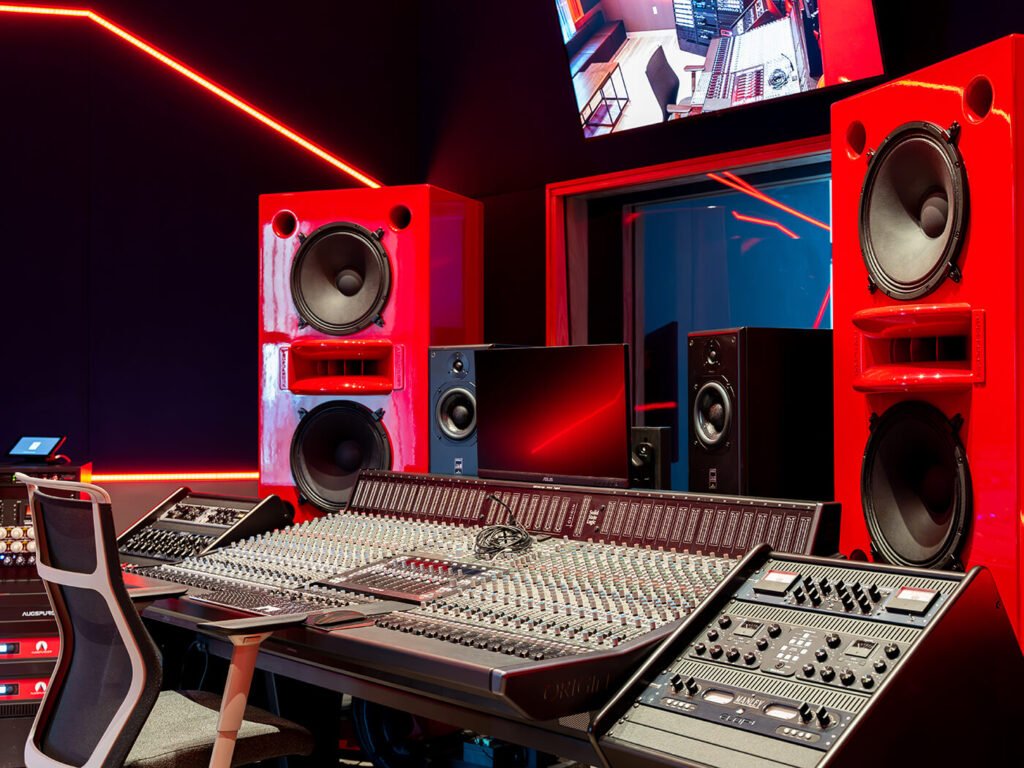

Getting studio space in New York City is expensive. It’s why most NYC-based artists we speak to are making beats out of their bedrooms, or sharing a studio with friends and collaborators. Hip-hop and EDM mogul Frank Babar isn’t exactly trying to create an affordable alternative with Embassy Studios — that’s obvious enough when taking a look inside the space. But he and his team are trying to make Embassy Studios a different kind of workspace for NYC creatives; one that encourages in-person collaboration with other artisarts, producers, engineers, and writers. With a ‘record anywhere’ approach, the facility is primed for capturing spontaneous sparks among peers. It is, of course, also ridiculously kitted out.
From whopping pairs of Augspurger monitors found in most rooms, to the aptly-named ‘Manley Tower of Power’ and beyond, there’s an obscene sense of luxury about the place. As the team tells us though, even the gear within these walls can’t rival a producer’s experience and expertise.
Speaking to us over email, the team at Embassy explain the the studio’s attention to detail, their biggest investment, and why every room can be considered part of the signal chain.
Hey team Embassy! It’s an ambitious project you’ve got going here, from the building itself to the immaculate detail in each room and the extravagant gear. What made you go this big in NYC?
“The vision behind the Embassy was to create a dynamic, world-class creative destination. New York has always been a global centre for music, culture, and storytelling but we saw an opportunity to build something that went beyond the traditional recording studio. We wanted to create an environment that delivers exceptional sound and recording capabilities while also inspiring collaboration, innovation, and community.”

“Our Studio A1 live room, Studio A2 control room and Multimedia room feature dramatic 20-foot windows that flood the space with natural light, an experience rarely found in professional recording studios. These rooms also offer sweeping views of the Empire State Building and the Manhattan skyline. Every room was thoughtfully designed to be flexible and adaptable, with Dante-enabled infrastructure allowing clients to customise each space to fit their project needs.”
“A great example of that was a recent artist camp that hosted 50 people, that included the artist’s songwriters, producers and A&R team preparing for their next album. Where every studio was in use simultaneously. Beyond our recording rooms, we transformed the live room and our acoustically treated multimedia room into fully functional writing and production spaces, allowing multiple creative teams to work in parallel. That kind of flexibility was built into Embassy from the beginning.”
Vanessa Sanchez, COO at Embassy Studios
Can you walk us through the rooms at Embassy and briefly share what each one is designed for?
Embassy was designed as a complete creative campus rather than a collection of recording studios. Every room has a distinct purpose, but they’re all connected through our Dante-enabled infrastructure, allowing artists and production teams to move seamlessly between spaces and customise their workflow.
Our two flagship Studio A rooms are built for major recording projects. Studio A1 is centred around our SSL Origin console, Augspurger Duo 15, Augspurger Sub 18, ATC SCM20ASL and connects to a stunning live room with soaring 20-foot windows, a private lounge, and views of the Empire State Building, creating an environment that’s as inspiring visually as it is sonically. Studio A2 is centred around our SSL AWS 948 (24 Preamps) and serves as a second premium recording suite, giving artists the flexibility to run simultaneous sessions or expand larger productions across multiple rooms.

“Our two Studio B rooms are designed for songwriting, production, vocal recording, and mixing. Each features its own ISO booth, SSL Matrix2 Delta console and a highly efficient workflow, making them ideal for producers and writers while remaining fully integrated with the rest of the facility.”
“Beyond the recording studios, we have two dedicated production rooms for programming, editing, and writing, a Dolby Atmos mix room for immersive audio, a dedicated podcast room, and an acoustically treated multimedia room equipped for interviews, livestreams, press events, content creation, and live performance, all with incredible views overlooking Manhattan.”
Vanessa Sanchez, COO at Embassy Studios
What’s the latest gear purchase for Embassy and why now?
“The new Manley Dual Band EQs are the latest addition to our ‘Manley Tower of Power.’ While the refreshed design, updated logo, and new colourway are welcome, it’s the sonic performance that truly impresses. They retain the unmistakable weight, depth, and harmonic richness of Manley’s transformer- and tube-based circuitry while offering a level of clarity and top-end extension that feels remarkably modern. Unlike many vintage passive EQ designs, they preserve detail and air without sacrificing the musical character that makes Manley gear so desirable.”
Steven “RAWQWLTY” Tejeda, Resident Engineer at Embassy Studios
What’s been the biggest investment into the studio? Was it worth it?
“The acoustics and the rooms themselves. People often focus on the gear, but the environment you are working in also matters a lot. Having the right acoustics and listening environment gives people confidence to make better creative decisions. In many ways, the room becomes another piece of the signal chain. What I’ve also noticed is the effect the spaces have on artists. When artists walk into a great-sounding room, it changes the energy of the session. They become more engaged, more confident in what they’re hearing, and those moments often lead to better performances and better records.”
Sean Park, Resident Engineer at Embassy Studios
“This may sound a little cheesy, but to me, the biggest investment in the studio has always been the Embassy team itself. From the engineers to the interns to management and beyond, everyone plays a role in creating a symbiotic environment that feels creative, professional, and genuinely enjoyable to work in. There’s a real sense of chemistry here, and having positive energy and the right people around is invaluable and far more important than any one piece of gear.”
“I’d also say the level of detail that went into the rooms themselves was a huge investment. I’ve worked in a lot of studios around New York and New Jersey, and Embassy’s rooms are by far some of the best-sounding rooms I’ve ever been in. The acousticians were incredibly intentional with every measurement, material and decision that shaped the sound of the room. On top of that, having Dave from Augspurger come in to tune the speakers after major sessions helps make sure the next artist walks into a room that’s accurate and readily translatable. That level of care is a big part of what separates Embassy from other studios.”
B-Hall, Resident Engineer at Embassy Studios

To flip that, what’s a budget piece of audio gear that’s surprisingly essential to Embassy?
““If we are talking budget-friendly gear, it would have to be the Apollo Twin. The Apollo Twin offers everything from recording to mixing and mastering with its plug-ins all in one package. We do have some people who prefer working on an interface like the Twin because it’s fast and efficient, and there’s nothing wrong with that. At the end of the day, whatever gets you closest to the artist vision will always matter more than how expensive your gear is.”
Sean Park, Resident Engineer at Embassy Studios
“A budget piece of gear that has been essential for us at Embassy is our TRS-to-TT cables, nothing flashy, but necessary in today’s world. Most artists and producers are used to working from home with their own laptop and interface setup, so being able to give them a true plug-and-play option is huge. Instead of relying on an aux cable, we can connect them directly into almost any section of our patchbay, whether that’s through our preamps or compressors, into the SSL board directly, or straight to the monitors. It’s a cleaner, higher-fidelity way to bridge their personal workflow with the studio’s infrastructure. That kind of flexibility is essential because it allows artists and producers to bring the comfort and familiarity of their own setup into Embassy, while still having access to state-of-the-art gear, accurately treated rooms, and a fully professional studio environment.”
B-Hall, Resident Engineer at Embassy Studios

Embassy runs on a “record anywhere” setup. We’ve seen this in a few studios lately — can you talk us through how that flexibility changes the way a session, or a whole project, actually runs? And why is it becoming so commonplace in studio complexes now?
“Every artist who comes through the door has a different workflow. Some like to be in a big live room to track live instruments, some prefer recording in a vocal booth, and some might even want to record in the lounge sitting on a sofa. Having all of our rooms connected through both analogue and digital infrastructure gives us the flexibility to cater to however people like to work, rather than forcing them into one way of recording. The flexibility also allows us to use each room as its own isolated recording space. If there’s a band that wants to track individually, the lounge or any of the rooms can be turned into its own booth, and everyone can still interact with each other through the cameras we have in each room.”
Sean Park, Resident Engineer at Embassy Studios
Do you have a dream piece of gear for the studio?
“There’s so many to choose from but the one I’ve been eyeing is the Hazelrigg VNE Tube compressor. I’ve only had experience with the plug-in version, but even within the emulation, it compresses without degrading the source. It adds a sense of lushness that’s consistent no matter what you run through it. I like to have gear that I constantly want to reach for, and the VNE would definitely be one of those pieces.”
Sean Park, Resident Engineer at Embassy Studios
“My dream piece of gear for the studio would have to be an AKG C12 microphone, specifically the green body with the gold capsule. When I first graduated from audio school, the C12 was one of the first high-end microphones I ever worked with. Going from using that mic in a small production-style studio in New Jersey to cutting vocals with it at Embassy, which I consider one of the true meccas of recording studios, would feel like a real full-circle moment for me. Beyond the personal connection, it’s just an incredible-sounding microphone. It has a way of bringing out the detail in a vocal while still holding onto the warmth, character, and emotion of the performance. It also sounds amazing on R&B vocals, which is my favourite genre to work on.”
B-Hall, Resident Engineer at Embassy Studios

What’s a music production myth you think needs debunking?
“That gear is what makes artists sound great. Gear can absolutely help you get to the sound you are after, but it’s really the collaboration between the artist, producer, and engineer that shapes the record. The artist brings the performance, the producer shapes the creative vision, and the engineer delivers that vision sonically. No piece of gear is going to replace the years of knowledge and experience that everyone brings into the room. Those are the things that make a record special. The gear is just there to help you capture and enhance what’s already there.”
Sean Park, Resident Engineer at Embassy Studios
Who gave you the biggest lesson in your career? Can you tell us about how it impacted you?
“Believe it or not, one of the biggest lessons I ever learned actually came from an old AAU basketball coach. After kicking someone off the team for being late, he said, ‘If you’re early, you’re on time. If you’re on time, you’re late. And if you’re late, you’re fired!’”
“That quote stuck with me, and I’ve carried that mindset into almost every area of my life, especially engineering. I’m the engineer who shows up way earlier than necessary, but that extra time allows me to settle in, prepare, and make sure the room is ready before the artist walks in. In my experience, being over-prepared creates space for the session to flow naturally, and the less an artist has to think about the technical side, the more they can stay focused on creating.”
“Another lesson I had to learn was how to remove my ego from the mixing process. We all think that to impress the artist, we need to add all the bells and whistles — the big reverbs, spacey delay throws, drops, stutters, effects. But most of the time, the artist isn’t asking for a completely new version of the song. They’re trusting you to bring out the best version of the idea they already believe in. That doesn’t mean you shouldn’t be creative or push boundaries, but it does mean you have to understand your role. Engineering is creative, but it’s also a service. Sometimes the most valuable thing you can do is not show off what you can add, but understand what the song actually needs.”
B-Hall, Resident Engineer at Embassy Studios
Learn more at Embassy Studios.
The post Inside Embassy Studios, where the rooms become part of the signal chain appeared first on MusicTech.