
News
How Jeff Mills brought his true vision for his 1995 Liquid Room mix to life with Spatial Audio
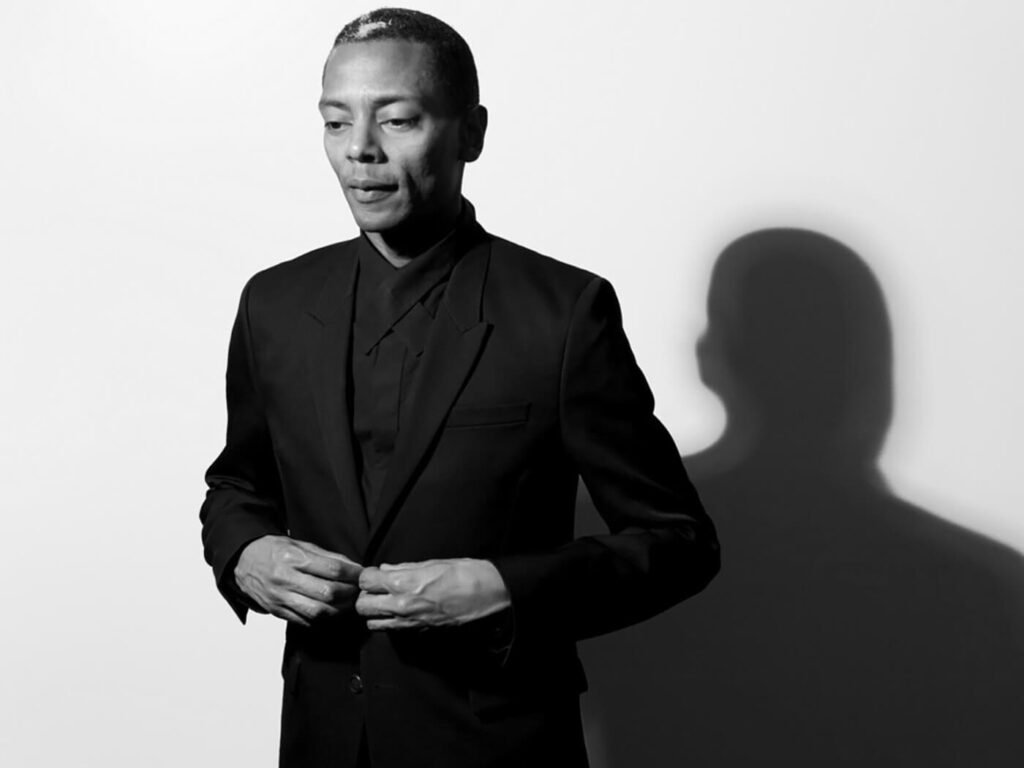
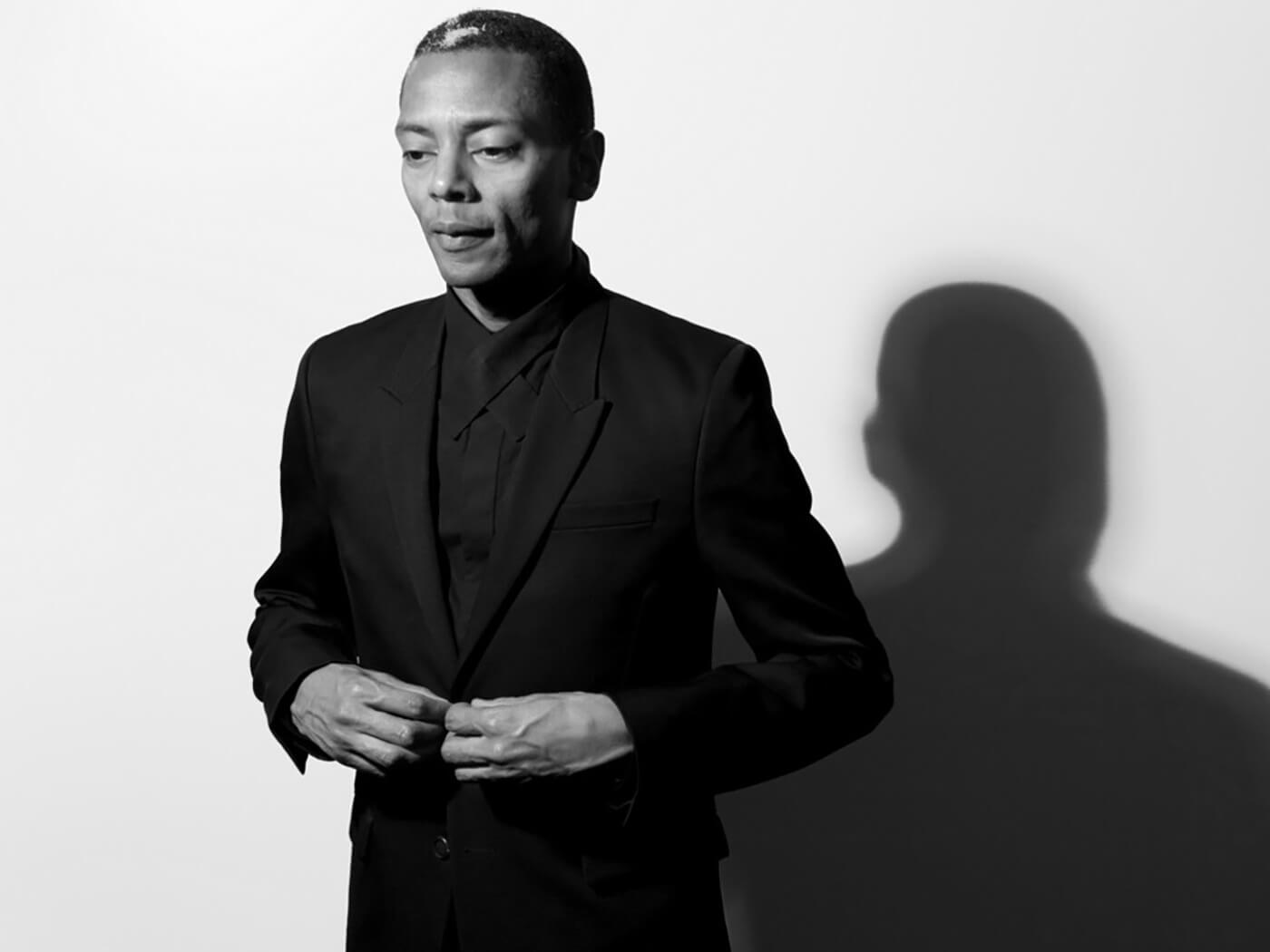
As techno blares through the 14 PMC loudspeakers in Apple Music’s Los Angeles Spatial Audio Mixing Studio, Jeff Mills raises his hands to alert Cliff Norrell, Apple Music’s lead spatial audio engineer, to cut the audio.
They’re currently going over Mills’ March set at New York’s Knockdown Center. The show was a part of Mills’ tour celebrating the 30th anniversary of Live at the Liquid Room – Tokyo (1996), his mixtape that defined live DJ set recordings. Of the over 50 dates of the tour across five continents, this is the recording that will be released on Apple Music in Spatial Audio.
To that end, Mills isn’t stopping the session to revise anything related to the music itself. He’s doing so because an enthusiastic crowdmember can be heard vocally releasing pure dancefloor joy over the raging soundscape. He wants to hear those shouts as much as possible in the final mix.
“It’s a live recording. It’s not just music. It’s the ambience of the room. The people. The wild animals are a part of it,” Mills says with a sharp smile. He goes on to note that he intended to elicit these audience reactions during the set.
“I was lucky enough to get the response from people at certain times because I’m strategically and tactfully doing things with the music to get that response,” Mills continues. “A lot of the music that I played earlier in the set were actually classics from 1995. The audience has some knowledge about those tracks. The combination of my actions and the response is what we’re working to match up throughout the mix.”
To highlight this specific crowd response, Norrell solos different tracks in the sessions. Each one represents a speaker in the 9.1.4 configuration, which in turn represents where a microphone was placed in the venue. When he gets to the rear right speaker, the shout comes through clear, and he gives that specific track a quick, automated volume boost for the length of the shout.

“It’s important for culture in general to be able to replicate something that happened in the past as close to the original feel of it,” Mills explains. With this entire tour, his goal was to replicate the feel of the Liquid Room mix, which is considered the gold standard of live dance music recordings (Pitchfork heralded it with a perfect 10/10 review). He even brought some of the original vinyl records he played in 1995 (the show was in 1995, and the mix was released in 1996).
“It’s like classical music. Classical musicians try to replicate, as closely as they can, what the composer actually created,” Mills continues. “We are trying to enhance the art form, and the genre, and the culture of dance music by making it possible for people in the future to hear it the way that we heard it.”
To capture a recording accurate enough to achieve that same goal, the Apple Music team placed 14 mics around Knockdown Center’s 20,000 square-foot main hall to capture the audience and ambience.
Four Shure dynamic mics were on the front of the main stage, and two were along the front of the second stage. Dynamic mics were chosen to prevent clipping and capsule damage as a result of the high sound pressure levels from the subs near the stage. They also hung four DPA 2017 shotgun mics from the lighting truss above the crowd, and four Shure KSM137 condenser mics were placed along the walls.
Upon listening, the primary source of audio is the direct stereo feed from the DJ mixer. They opted not to do any upmixing, or rather, sending the DJ feed to different Atmos channels, as the experience of the room was Mills at the front with the music coming from that single point.

“The most robust sound coming from that direction, the source of the sound to the other parts of the room, the acoustics of it, is important in this live recording,” Mills says.
It’s important when mixing spatial in 2026, and it was also important to Mills back in 1995 at the Liquid Room. Despite the spatial format only becoming more accessible in recent years, he wanted to do this exact same thing for the original 1995 set. Other DJ mixes out on physical release at the time were studio mixes. The tracks could be perfectly aligned and curated, which certainly makes for a pleasant listen, but doesn’t capture the culture as it exists.
“I was trying to do this 30 years ago. This is what we were planning for. I had six-to-eight microphones at the Liquid Room. Once we got to the point of speaking to Sony Music at the time, they weren’t convinced of the final format,” Mills explains. “It would have to be on DVD, and this would be the first DVD that was only used for audio. They didn’t believe that people would accept that idea. So, I had to narrow it down to a stereo mix.”
Mills is clearly taking advantage of the technology now. Atmospherically accurate DJ sets are one angle, but he’s also thinking beyond that. Throughout his career, he’s explored a vast number of ambitious live shows.
Two examples are when he performed with the Montpelier Philharmonic Orchestra, and when he set up machines among ruins on the Greek island of Delos alongside Indo-French tabla virtuoso Prabhu Edouard and French keyboardist Jean-Phi Dary.
Mills is thinking about these kinds of shows in spatial as well.
“We hear in 3D. The more that we hear things like this [recording], the distance will narrow between this and what we normally hear with our ears. Then hopefully we will begin to really believe what we hear,” Mills says. “When that happens, it makes it very interesting for musicians like myself to think about making music conceptually and all the things that I can put in your ears that might make you feel and think differently.”

Mills is interested in the idea of perceived transportation—the audio being so immersive and so convincing that listeners truly believe they have travelled to a new environment. He tried to do this in Paris with a show concept called Close Encounters of the Fourth Kind. The idea was for attendees to be guided to a second location that they did not know existed when they bought a ticket. That show, unfortunately, did not get the proper permits for two locations.
He’s also working on a show around his upcoming concept album, A Trip To Vega, where he will set up the stage like a laboratory and lead the audience to the star system of Vega. The musicians will be facing the screen as well, like they are looking out of the cockpit of a spaceship, emphasising that the journey is the point of focus. Not them.
Overall, that idea defines Mills’ work with these kinds of performances and recordings. Letting the listeners experience more than his individual contribution gives them a greater understanding of the culture he’s been championing for decades.
“We’re bringing up the crowd in these recordings because they are important to any atmosphere where you have a DJ, an audience, and flashing lights. All this effort goes into making these events, so the listeners need to feel as if they’re actually in that setting,” Mills says. “I wish we had the type of technology that rolled everything together. So not just the sound, but the smell, the lights, the humidity, being shoved by someone who just saw their friend. I can see these things coming.”
The post How Jeff Mills brought his true vision for his 1995 Liquid Room mix to life with Spatial Audio appeared first on MusicTech.