
News
“Who cares if you layer two kicks if it sounds great?”: Collect 200 talk synths, samples and letting the strongest parts of your tracks speak for themselves
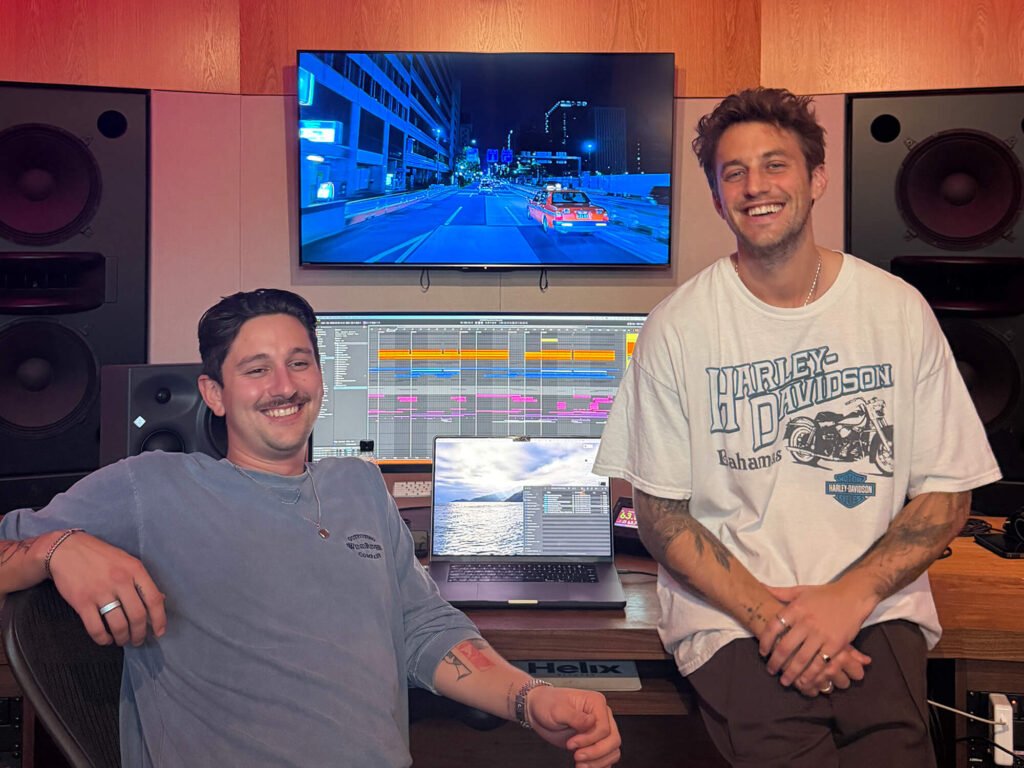

Working between LA and Toronto, producers and musicians Stevie Appleton and Nick Henriques have a refreshing approach to producing with the software and hardware they have access to. They often start the songwriting process with a live jam, then refine the arrangement as they go, being guided by feeling rather than convention. When it comes to mixing, they keep it natural, sometimes replacing MIDI parts with real synths, and a beloved vintage bass guitar.
Having racked up almost 50 million streams to date, thanks to their creative approach, we catch up with them to hear about their process and what their plans for live performance and a second album look like.
Hi Stevie and Nick. You work together as Collect 200 but you both have long careers as songwriters and producers. How did you come to collaborate initially?
We were familiar with each other’s work in the dance space and had been trying to get together, I suppose, to write something for someone else. But we met at Miami Music Week and spent nearly a week hanging out before writing our first song, which happened to be Mixed Emotions, on the last day of the trip.

Your single Goodbye is the latest in a series of releases since last year that have racked up an amazing 17.5 million streams. There’s clearly a market for uplifting, feel-good music – but what else do you attribute this success to?
Quite honestly, the music is extremely authentic to both of us, written more off a certain feeling rather than aiming at ‘catchy’ or a commercial route. There’s a chance that some people are seeking more and more of that these days in a world where you can press a few buttons and it generates a song. We like to think this music feels very human, which is a crazy thing to need to explain!
Your debut album, Everything Will Be Alright, is out now. What is the concept behind the album and can you share a little about how you approached it as a project – how it came together?
The album really felt like a journey of discovery and optimism to us. A lot of the songs were written about some harder times that came good, some new beginnings, even about the project itself. But deep down, we had a sense that things work out the way they are supposed to in life, and that sentiment fit with the energy of the music so well.
You are planning your debut live shows – can you share any details about what we can expect to see and hear from them?
We play live as a duo using Ableton and adding live vocals, keys, loops and FX. So it’s definitely quite far from a DJ set, but we like to keep the energy pretty consistent, bar a few breaks in the set to make it feel more in the lane where you can just vibe and flow with it. We’re very happy with the energy the live sets have been bringing so far.

Tell us a bit about your studio.
We work both independently, between LA and Toronto, and of course together. The workflow is great, there’s a really solid crossover in our skill sets. Stevie is more on the musical side; he has lots of vintage synths — a Prophet 6, Juno, plus guitars. Nick has a great studio in Toronto, and that’s where the records end up being finished.
What’s your latest gear or plugin purchase?
One of the secret (or not so secret) recipes was buying a 1968 Hofner bass. It immediately works, with few FX needed – it’s so round and warm. It’s been the backbone to the feel of the album, actually. A great plugin we’ve been using on our drums is Orion by Cradle, which is perfect for glueing drums together.
What’s the best free plugin you own?
For sure I’d say the Softube Saturation Knob. It adds nice subtle analogue weight to the sound and is especially good for bass – it instantly glues it together.

What’s been the biggest investment in your career/studio?
Vintage synths for sure. At the end of the album process, on a lot of the plugin synths, we then replace them with Super6, Prophet and Juno 106. We’ll do a lot of passes messing with LFOs and cutoffs. It’s very fun and you know what you have is a one-of-one. There is a BBE Sonic Maximizer and 2 classic blue stripe Universal Audio 1176 compressors at one of the studios we use in Toronto, and a lot of the records on the album have had stems run through those to put that final polish on them. I think we need more of those.
Your tracks all lock into a really infectious groove. Do you get that from playing live instruments, from samples or quantisation? Or some combination of all the above?
We use a lot of dusty drums samples that have little swing moments in them that really bring songs to life. On top of that we will play some live guitar and keys without quantizing too much to leave that slight human error in timing. On top of that, the natural grooviness is something that we go to when writing, so a lot of it comes from the ‘jam’ at the beginning of the songwriting process.

Your mixes sound rich and full and yet there’s space in there – they don’t sound overcrowded. What techniques do you use – maybe with regard to EQ and compression – to achieve that effect?
We like to approach the mixes by trying to do the least amount to achieve the best result. We really believe in simple, broad movements when it comes to EQ, reverb, and saturation – less is more. Pick the things in the record that are confident and allow them to be confident while having the rest in support of them.
How do you see your sound and studio evolving in the next two years?
For the second album which we’re currently writing, our dream was always to have live strings, horns and drums. It will likely come at the end of the writing process, but we’re 100% going to find the best place to capture that authentic vintage soul sound rather than imitate it with samples and plugins. Basically it’s a case of making our own samples!
Do you have a dream piece of gear?
In the dream studio, we’d have a perfectly mic’d up drumkit and percussion rig going through a Neve console, with perfect vintage mics set up and ready to go. I think drums are such a crucial part of any mix, especially in our world. And having access to layering dance loops with something like that 70s drummer sound would be everything to us.
What’s a music production myth you think needs debunking?
We’re pretty focused on not mixing the record like dance records, not scooping out a lot of the low mids, so that it sounds good on a DJ stage. For us, that’s where the warmth and the ‘hug’ as we like to call it sits. It’s a huge case of trial and error to get the balance, but a lot of mix engineers will just wipe out that frequency, and for us, that’s where a lot of the feeling is. We like to throw out a lot of “mixing rules”, and go 100 per cent based on feeling. Who cares if you layer two kicks if it sounds great?
Who gave you the biggest lesson in your career? Can you tell us about how it impacted you?
Someone said to us recently in this album 2 process, ‘the most important thing for us to do is follow our intuition rather than try and copy what we did in album 1, as tempting as it is’. It’s actually crucial, otherwise you end up not writing from the heart again, and lose what we believe the magic of the music to be. So with that in mind, we are going to be free in the writing and even in style, and go where the process takes us without comparing too much to our previous songs!
The post “Who cares if you layer two kicks if it sounds great?”: Collect 200 talk synths, samples and letting the strongest parts of your tracks speak for themselves appeared first on MusicTech.